- Home
- /
- Training Guides
Training Guides
German Shepherds learn fast in both directions. These guides prioritise clean mechanics, honest criteria and outlets for drive — so obedience holds up outside the living room.
- Ideal session length 3 to 5 minutes, several times daily
- Hardest stage 8 to 18 months of adolescence
- Non-negotiables Recall, loose lead, settle, out
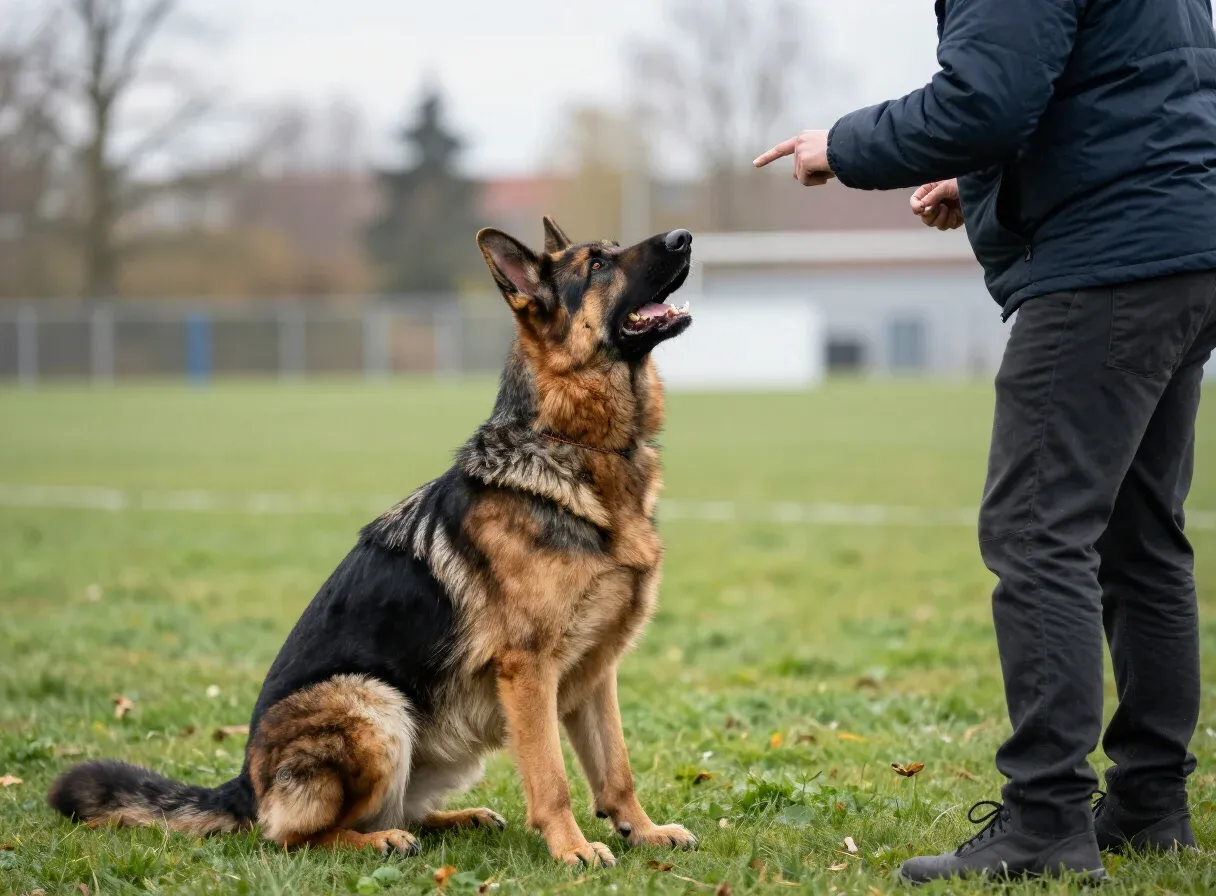
How we approach it
Step 1
Fix the mechanics
Marker word, reward placement, one repetition per loop. Precision here removes half of all later frustration.
Step 2
Add criteria, not pressure
Raise one variable at a time — distance, duration or distraction. Never two in the same session.
Step 3
Proof in real environments
Car parks, pavements, livestock fields. A behaviour is only trained once it survives a new postcode.
Step 4
Give drive a job
Tracking, tug with rules, scent games. Satisfied drive is what makes a shepherd easy to live with.
Guides in Training Guides
6 articles