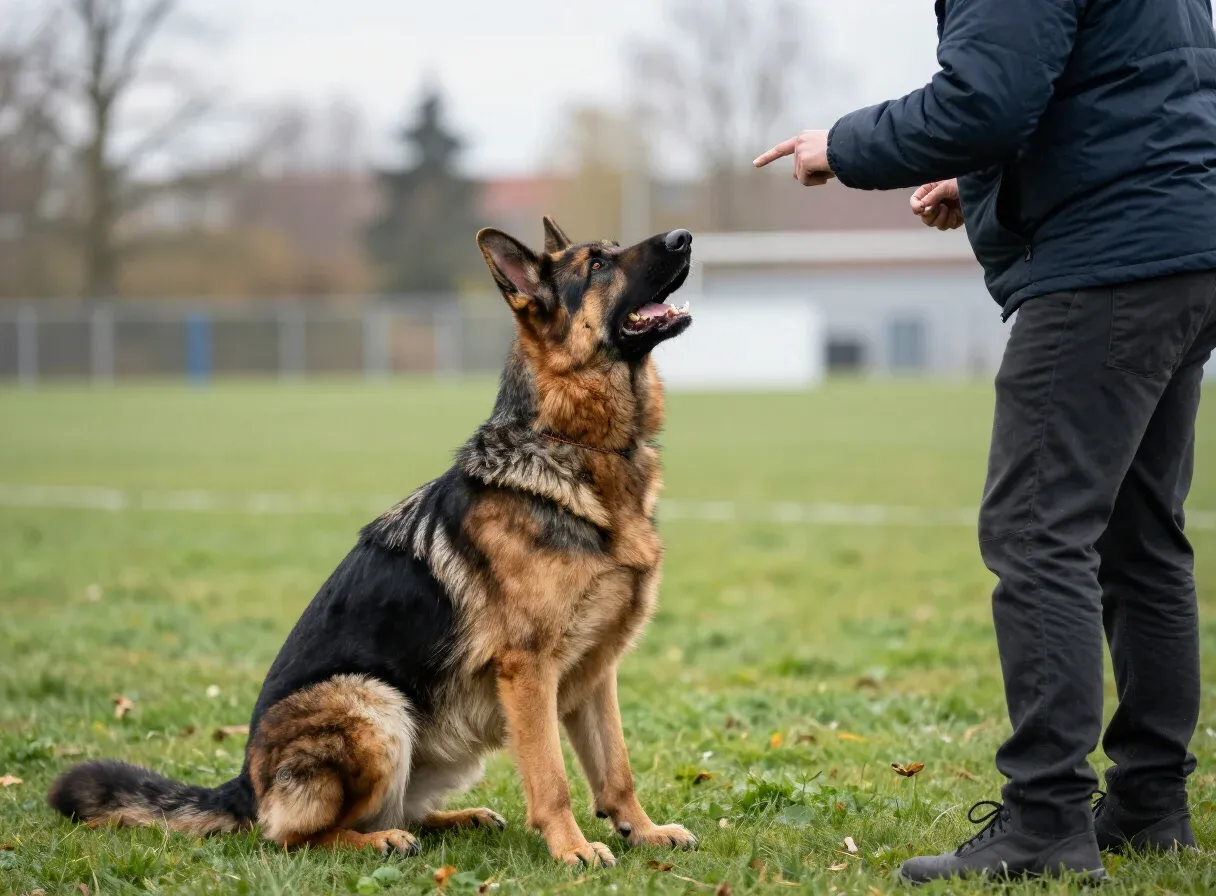
Marker training can make communication with a German Shepherd much clearer, but good results depend heavily on the handler’s mechanics. When progress stalls, the problem is often timing, reward placement, or inconsistent repetition, rather than a lack of motivation from the dog.
Timing Matters
A marker such as “yes” or a click should happen at the exact moment your dog performs the behavior you want. If the marker comes too early or too late, you may accidentally reinforce the wrong action.
Practice watching the behavior closely and marking precisely before worrying about increasing difficulty.
Reward Placement
Where the reward goes can influence what your dog does next. If you want your Shepherd to remain close to you, deliver the reward in a position that supports that behavior. For movement exercises, placing the reward strategically can encourage the direction or position you want.
The reward should reinforce the behavior—not accidentally create a new problem.
Build Clean Training Loops
A simple training loop is:
Cue → behavior → marker → reward → reset → repeat.
Keep each repetition clear. Avoid adding unnecessary cues or repeating the command when the dog does not respond.
If your Shepherd becomes confused, simplify the exercise and create a few easy successes before increasing difficulty.
Good marker training is not about constantly increasing pressure or excitement. It is about clear communication and consistent mechanics.
When training plateaus, look at your timing, reward placement, and repetition first. Small improvements in handling technique can often produce significant changes in the dog’s understanding.