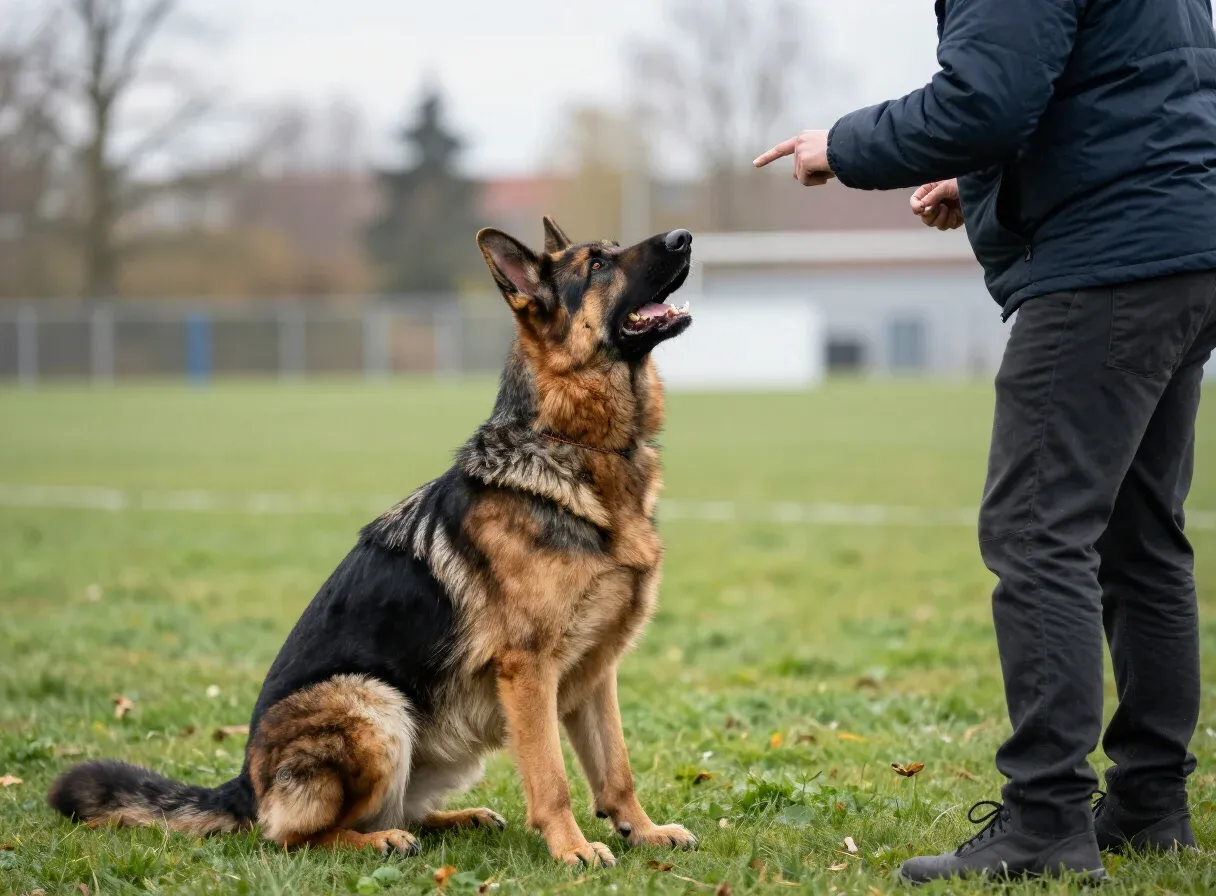
Marker training is a powerful way to communicate clearly with a German Shepherd, but success often comes down to the handler’s technique. When progress stalls, the issue may not be motivation—it may be timing, reward placement, or inconsistent training loops.
Get the Timing Right
Your marker, such as “yes” or a click, should happen at the exact moment your dog performs the behavior you want. A late marker can reward the wrong movement or position.
Start with simple behaviors and focus on marking precisely before increasing difficulty.
Use Reward Placement Carefully
Where you deliver the reward can influence your dog’s next behavior. If you want your Shepherd to stay in a particular position, deliver the reward where you want the dog to be.
For example, rewarding a correct heel position from the appropriate hand position can help reinforce staying close and aligned.
Keep Training Loops Clean
A simple training loop should look like:
Cue → Behavior → Marker → Reward → Reset → Repeat
Avoid repeating the cue several times or adding unnecessary movements. Each repetition should be easy for the dog to understand.
If your Shepherd begins guessing, rushing, or losing focus, simplify the exercise and return to successful repetitions.
Fix the Mechanics Before Changing Motivation
When a dog appears to lose interest, handlers often increase rewards or make training more exciting. Sometimes the real problem is unclear communication.
Check your timing, reward placement, cue delivery, and consistency first.
Clean mechanics create clear communication, and clear communication makes it easier for your German Shepherd to understand exactly which behavior earns the reward.