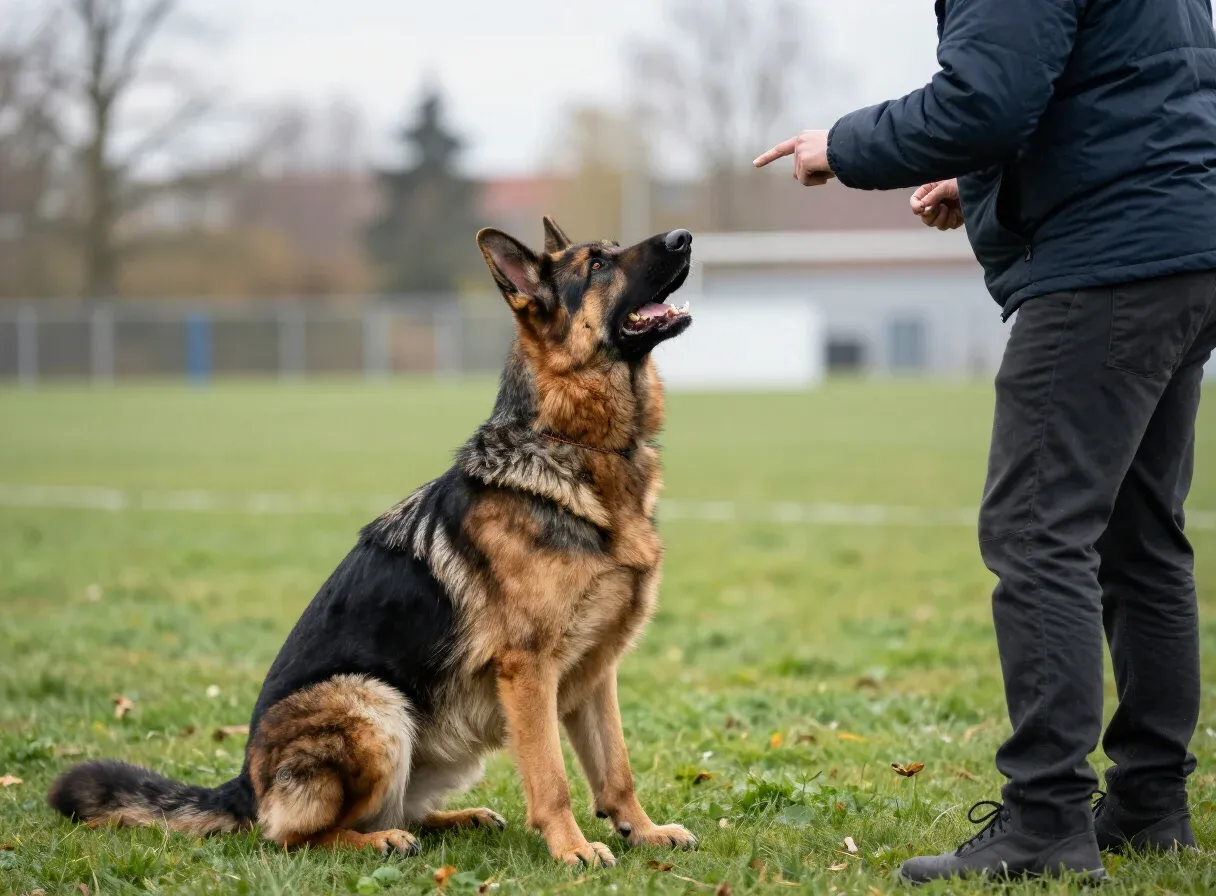
A German Shepherd can be energetic, driven, and highly focused, but learning how to switch off is just as important as learning to work. “Out” and “settle” are useful skills for helping your dog move from high arousal to calm, controlled behavior.
Teach “Out” First
Start in a quiet environment. During play with a toy, give the “out” cue and stop moving the toy. The moment your dog releases it, mark the behavior and reward appropriately.
Keep sessions short and avoid turning the release into a struggle. Your goal is for your Shepherd to learn that releasing the toy does not mean the fun is necessarily over.
Gradually practice around greater distractions and during more exciting games.
Build the Settle
Once your dog understands how to disengage, teach a clear settle behavior. Use a mat, bed, or designated place and reward calm behavior there.
Initially, reward frequently for staying relaxed. Gradually increase the time between rewards while maintaining a quiet environment.
Practice after walks, training sessions, or play when your dog is already somewhat relaxed.
Take It Into Public
When the behavior is reliable at home, practice in increasingly distracting environments. Start somewhere calm before moving to busier locations.
Don’t wait until your dog is already overwhelmed. Give the settle cue early and reward calm observation.
The goal is not to eliminate your Shepherd’s drive. It is to teach the dog that high excitement can be followed by controlled relaxation.
With consistent practice, “out” becomes a reliable disengagement cue, while “settle” becomes a genuine off-switch your dog can use both at home and in public.