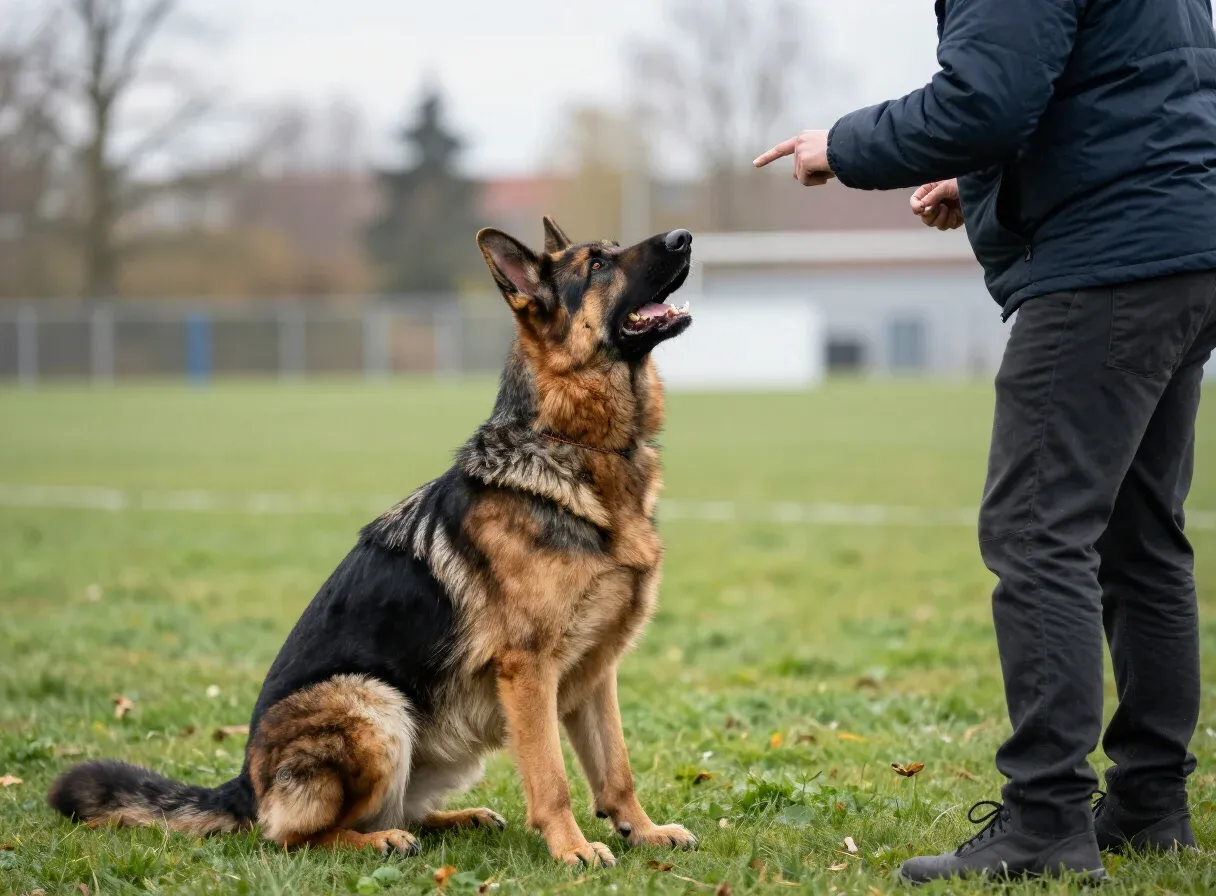
House training a German Shepherd puppy is less about waiting for the puppy to “figure it out” and more about creating a predictable routine. A schedule-driven approach reduces accidents and gives your puppy plenty of opportunities to succeed.
Build a Routine
Take your puppy outside regularly, especially after waking, eating, drinking, playing, and before bedtime. Very young puppies may need frequent breaks throughout the day.
Use the same toilet area when possible and calmly praise your puppy immediately after they finish.
Keep a simple record of meals, water, toilet breaks, and accidents. Patterns will quickly become easier to recognize.
Supervision Prevents Accidents
When your puppy is awake and active, keep them within sight. If you cannot supervise, use a crate or safe puppy area.
Watch for signs such as sniffing, circling, wandering away, or suddenly stopping play. Take the puppy outside immediately when you notice these signals.
Never punish an accident. Clean the area thoroughly so lingering smells do not encourage repeat accidents.
Handling the Week-Fourteen Slump
Many owners experience a frustrating period around this age when a puppy that seemed reliable suddenly has accidents again. Changes in routine, increased freedom, distraction, or simply moving too quickly can contribute.
Treat the regression as a training reset, not a failure. Temporarily increase toilet breaks, reduce unsupervised freedom, and return to the routine that previously worked.
Once your puppy is consistently successful again, gradually increase freedom.
If sudden or persistent house-soiling occurs despite a consistent routine, speak with your veterinarian to rule out medical causes.
Consistency—not punishment—is what turns successful repetitions into a reliable habit.