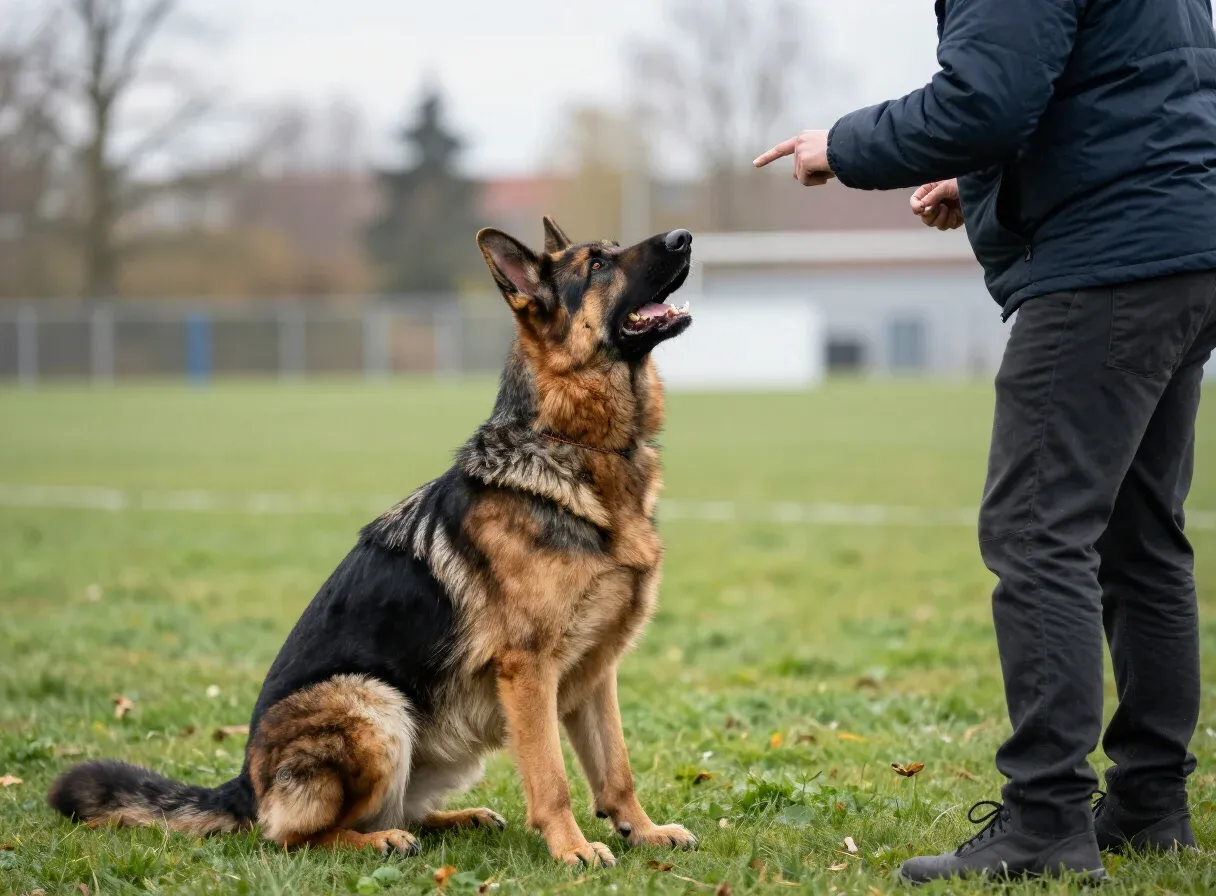
A working German Shepherd needs more than daily walks to stay fit. Good conditioning builds cardiovascular fitness, strength, coordination, and endurance while reducing unnecessary stress on the joints.
Structured Cardio
Start with a proper warm-up before demanding exercise. Gradually build structured cardio through activities such as brisk walking, controlled jogging, swimming, or hiking, depending on your dog’s age and fitness level.
Increase duration and intensity gradually rather than suddenly adding long runs or demanding sessions.
Build Hind-End Awareness
Strong rear-end control is essential for a working Shepherd. Exercises such as controlled backing up, stepping over low obstacles, slow turns, and appropriate balance exercises can improve proprioception and hind-end awareness.
Keep movements controlled and avoid repetitive jumping or high-impact drills, particularly on hard surfaces.
Recovery Matters
Fitness improves during recovery, not simply during exercise. Include rest or light-recovery days in the weekly routine, especially after demanding work.
Watch your dog’s movement during and after training. Persistent stiffness, limping, reluctance to move, or a noticeable change in gait can indicate that the workload needs to be reduced and may warrant veterinary assessment.
Train for Longevity
The goal of conditioning is not to exhaust your Shepherd. It is to develop a body that can perform reliably while minimizing unnecessary joint stress.
Progress gradually, train with purpose, and give recovery the same importance as exercise. A well-conditioned working dog should finish a session tired and satisfied—not repeatedly sore or worn down.