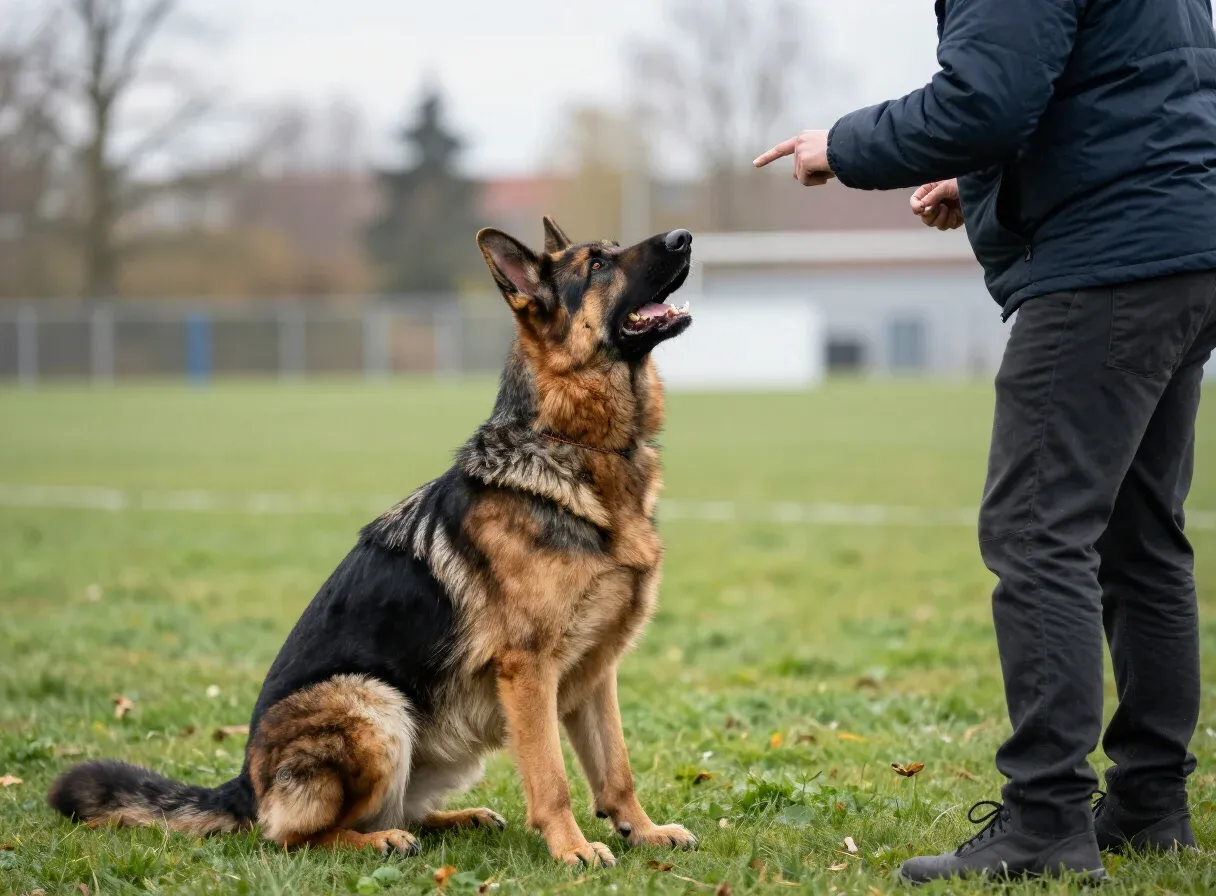
German Shepherd puppies explore the world with their mouths, and those sharp puppy teeth can make normal play feel like a serious problem. The goal isn’t to eliminate mouthing overnight, but to teach bite inhibition and appropriate ways to interact.
Start With Redirection
When your puppy bites hands, clothing, or feet, calmly redirect them to an appropriate toy. Keep a tug toy or chew nearby so you can quickly replace skin with something acceptable to bite.
Reward your puppy when they choose the toy instead of you.
Teach Tug Rules
Tug can be an excellent outlet when there are clear rules. Teach your puppy that play starts when you invite it and that releasing the toy earns another opportunity to play.
Keep sessions short and controlled. Avoid turning tug into a frantic struggle that encourages your puppy to grab anything within reach.
Recognise Overtired Puppies
One of the biggest mistakes is assuming a wild, biting puppy needs more exercise.
Puppies often become mouthier, faster, and less responsive when they are overtired. If your puppy suddenly starts biting everything, zooming around, or ignoring familiar cues, it may be time for a quiet break or nap.
Provide a safe resting area and help your puppy settle rather than continually adding stimulation.
Be Consistent
Avoid rough hand games that encourage biting and don’t punish or physically correct a puppy for normal mouthing. Instead, calmly interrupt inappropriate biting, redirect, and reward appropriate behavior.
With repetition, your puppy learns that people are not chew toys, toys are for biting, and calm behavior leads to more interaction.
Biting is a normal developmental behavior. With clear rules, appropriate outlets, and enough sleep, those “land shark” days can become much easier to manage.